
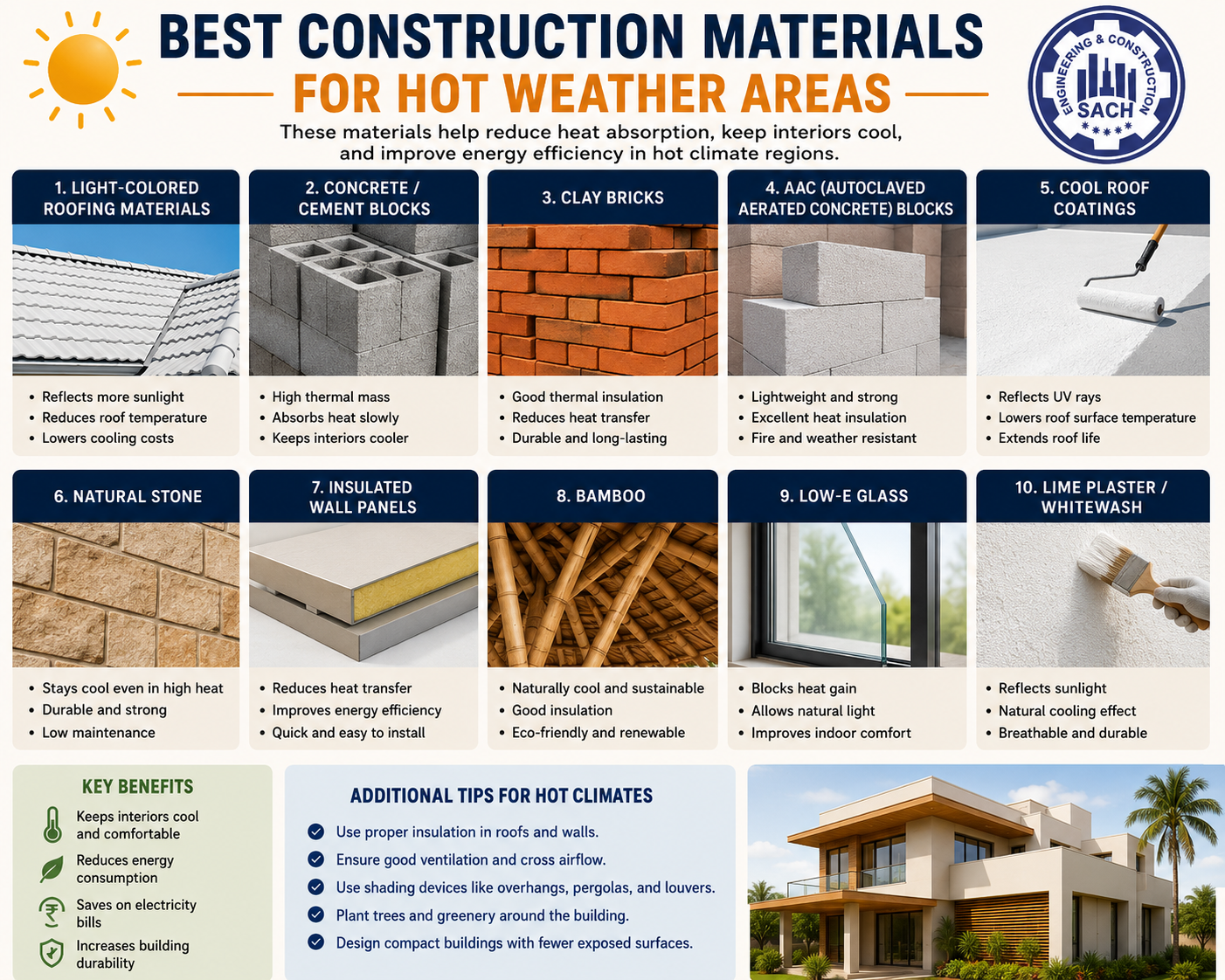
The Best Construction Materials for Hot Weather Areas are essential for building durable, comfortable, and energy-efficient structures in extreme climates. In countries like Pakistan where summer temperatures remain very high, choosing the right materials is not just a design decision but a necessity.
When the Best Construction Materials for Hot Weather Areas are used in construction, they reduce heat absorption, improve insulation, and lower electricity consumption. Poor material selection can increase indoor temperature and make buildings uncomfortable without heavy use of air conditioning.
Modern construction focuses on Best Construction Materials for Hot Weather that provide thermal resistance, sustainability, and long-term durability.
Importance of Best Construction Materials for Hot Weather Areas
The importance of Best Construction Materials for Hot Weather becomes clear when we analyze how heat affects buildings. High temperatures cause expansion in materials, cracking in walls, and increased energy usage.
Using Best Construction Materials for Hot Weather Areas ensures better thermal comfort and reduces cooling costs significantly. These materials help maintain a balanced indoor temperature even during extreme heat conditions.
In Pakistan, demand for Best Construction Materials for Hot Weather is increasing due to rising temperatures and energy costs.
Clay Bricks as Best Construction Materials for Hot Weather Areas
Clay bricks are one of the most widely used Best Construction Materials for Hot Weather Areas because of their natural thermal insulation.
They absorb heat slowly during the day and release it at night, making them ideal for hot climates. This natural process makes clay bricks one of the most reliable Best Construction Materials for Hot Weather for residential construction.
Clay bricks also offer durability, affordability, and long life span, making them a preferred choice among builders.
AAC Blocks in Best Construction Materials for Hot Weather Areas
AAC blocks are modern Best Construction Materials for Hot Weather Areas that provide excellent thermal insulation.
Their structure contains air pockets that reduce heat transfer, making buildings cooler in summer. This makes AAC blocks one of the most energy-efficient Best Construction Materials for Hot Weather Areas in modern construction.
They are lightweight, easy to install, and reduce structural load, which further improves building efficiency.
Concrete in Best Construction Materials for Hot Weather Areas
Concrete is a major construction material, but modern insulated versions make it part of Best Construction Materials for Hot Weather Areas.
Insulated concrete forms reduce heat transfer and improve energy efficiency. When used correctly, concrete becomes one of the strong and durable Best Construction Materials for Hot Weather for large-scale projects.
Heat-resistant coatings and additives further enhance its performance in hot climates.
Roofing in Best Construction Materials for Hot Weather Areas
Roofing plays a very important role in Best Construction Materials for Hot Weather Areas because roofs absorb maximum sunlight.
Cool roofing systems, reflective metal sheets, and insulated roofs are considered top Best Construction Materials for Hot Weather Areas for reducing indoor heat.
These materials reflect sunlight instead of absorbing it, which significantly reduces cooling costs in hot regions.
Insulation in Best Construction Materials for Hot Weather Areas
Insulation is one of the most critical parts of Best Construction Materials for Hot Weather Areas.
Fiberglass, foam, and rock wool insulation help reduce heat transfer and keep indoor environments cool. Without proper insulation, even the Best Construction Materials for Hot Weather Areas cannot perform effectively.
Good insulation improves energy efficiency and reduces dependency on air conditioning.
Glass Windows in Best Construction Materials for Hot Weather Areas
Modern glass technology has become an important part of Best Construction Materials for Hot Weather Areas.
Double glazed and Low-E glass windows reduce heat entry while allowing natural light inside. These windows are now widely used in energy-efficient buildings that rely on Best Construction Materials for Hot Weather Areas.
They improve comfort and reduce electricity usage.
Natural Stone as Best Construction Materials for Hot Weather Areas
Natural stone is a traditional but effective part of Best Construction Materials for Hot Weather .
Stone has high thermal mass, which helps maintain stable indoor temperatures. It absorbs heat during the day and releases it slowly at night, making it ideal for hot climates.
This makes stone one of the most durable Best Construction Materials for Hot Weather .
Sustainable Best Construction Materials for Hot Weather Areas
Sustainability is becoming a key factor in selecting Best Construction Materials for Hot Weather .
Materials like fly ash bricks, bamboo, and rammed earth are eco-friendly and reduce environmental impact. These modern solutions are now part of advanced Best Construction Materials for Hot Weather in global construction trends.
Flooring in Best Construction Materials for Hot Weather Areas
Flooring also contributes to Best Construction Materials for Hot Weather Areas.
Ceramic tiles, marble, and stone flooring help keep indoor spaces cooler. These materials do not trap heat, making them suitable Best Construction Materials for Hot Weather for hot climates.
Common Mistakes in Best Construction Materials for Hot Weather Areas
Many builders fail because they ignore proper Best Construction Materials for Hot Weather selection.
Using dark roofs, poor insulation, and low-quality materials reduces building efficiency. Proper selection of Best Construction Materials for Hot Weather is essential for long-term performance.
Importance of Climate-Based Construction
Climate has a direct impact on how a building performs over time. In hot regions, materials expand and contract due to continuous heat exposure, which can lead to cracks and damage. Proper planning during construction helps reduce these risks and improves overall building stability. Climate-responsive design also helps in creating comfortable indoor environments without excessive reliance on cooling systems.
Thermal Performance of Building Materials
Thermal performance refers to how well a material can resist heat transfer. Materials with high thermal resistance keep indoor spaces cooler by slowing down heat penetration. This property is essential in regions where temperatures remain high throughout most of the year. Better thermal performance also results in lower energy usage and improved comfort levels.
Role of Traditional Building Materials
Traditional materials such as clay-based products and natural stone have been used for centuries in hot climates. These materials naturally regulate temperature due to their thermal mass. They absorb heat during the day and release it slowly at night, helping maintain a balanced indoor environment. Their long-lasting nature also makes them a reliable choice for construction.
Modern Lightweight Construction Solutions
Modern construction has introduced lightweight materials that offer better insulation and faster installation. These materials reduce the overall structural load of buildings and improve energy efficiency. Their internal structure often includes air pockets that help reduce heat transfer, making them suitable for high-temperature environments.
Importance of Roof Design in Heat Control
The roof is one of the most exposed parts of any building and receives direct sunlight throughout the day. Proper roof design and material selection can significantly reduce heat absorption. Reflective surfaces and insulated roofing systems help maintain lower indoor temperatures and reduce energy consumption.
Energy Efficient Window Systems
Windows play a major role in controlling indoor temperature. Poor-quality windows allow heat to enter easily, increasing the load on cooling systems. Modern window designs focus on reducing heat transfer while still allowing natural light. Double-layered and coated glass systems are commonly used for better thermal control.
Use of Natural Cooling Materials
Some materials naturally help in keeping buildings cool due to their density and composition. These materials are often used in traditional and modern architecture to reduce heat buildup. They work by absorbing less heat or releasing stored heat slowly, which helps maintain a stable indoor environment.
Importance of Insulation in Buildings
Insulation is one of the most effective ways to control indoor temperature. It acts as a barrier that reduces heat flow between the inside and outside of a building. Proper insulation in walls, roofs, and floors can significantly improve comfort and reduce energy consumption in hot regions.
Sustainable Construction Practices
Sustainable construction focuses on reducing environmental impact while improving building efficiency. This includes using eco-friendly materials, reducing energy consumption, and designing buildings that respond to climate conditions. Sustainability is becoming an important factor in modern construction planning.
Conclusion on Best Construction Materials for Hot Weather Areas
The use of Best Construction Materials for Hot Weather Areas is essential for building energy-efficient and durable structures in hot climates like Pakistan.
From clay bricks and AAC blocks to insulation and reflective roofing, every material plays a role in improving performance. Proper use of Best Construction Materials for Hot Weather Areas reduces energy costs, improves comfort, and increases building life.
Future construction trends will continue to focus on advanced Best Construction Materials for Hot Weather Areas that support sustainability and smart living.